
[Hythe+] “Poets write when god descends on their forehead and novelists write like they are at work”: An Interview with Jeet Thayil
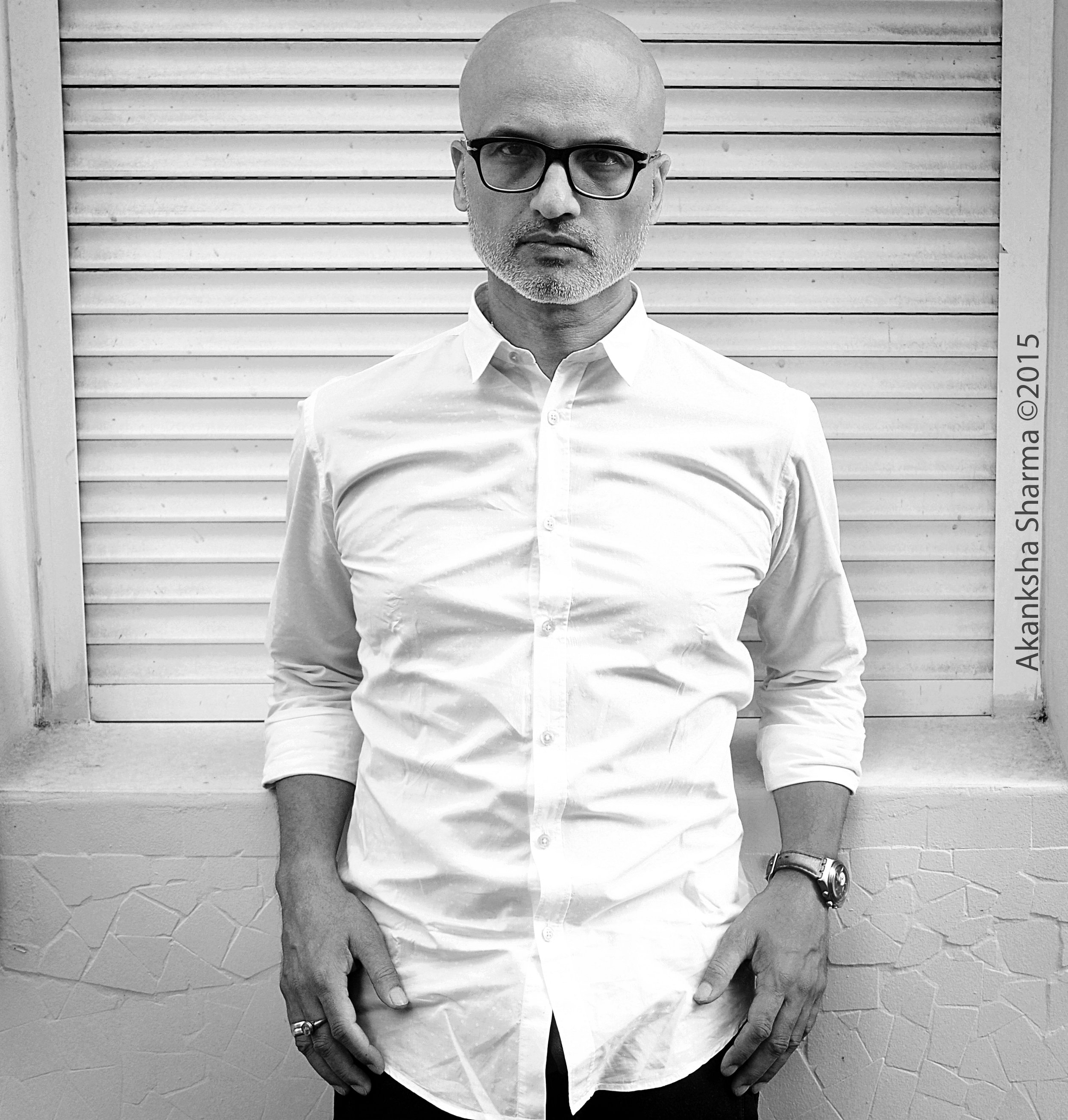
Jeet Thayil is a prominent novelist, poet and editor based in India. He recently edited The Penguin Book of Indian Poets, a mammoth anthology of Indian poetry written in English ranging from early pioneers Dom Moraes, Arun Kolatkar and Adil Jussawalla through to more contemporary writers such as Nisha Ramayya and Sandeep Parmar. Compared to its counterpart in the Indian English novel, Indian English poetry has not reached the same global attention, something which this anthology has the potential to remedy. In the following conversation we talk about the editorial process, the wider context of Indian poetry and its myriad languages, the question of poetic lineage, and the relationship between Thayil’s prosaic and poetic writing practice.
I have been reading and periodically dipping into the The Penguin Book of Indian Poets that you edited for the past year or so, once I managed to get a copy from India. This is the latest anthology, and perhaps most definitive, that you have edited out of a number since the early 2000s. I am interested in the process of how that came about, and particularly how UK poets were selected. How were you exposed to poets such as Bhanu Kapil, Nisha Ramayya, Vahni Anthony Ezekiel Capildeo and so forth?
At one time I'd probably never have known of Bhanu or Nisha or Vahni, unless I found a book by them at a bookshop or a library. But things have changed. All you need is an Internet connection. At this point, if you're interested in poetry and you haven’t heard of these three poets, you need to rethink your reading habits. For a time, they might have been poet’s poets, at the moment all kinds of people know or should know about them. It was important to me to have a presence in the book of British poets of Indian origin. With Vahni, for example, the Indian origin is twice removed, but there are trace elements. And you can see it in the flow when you come across their work in the context of other poets; there's a through-line. I wanted the book to include poets from around the world, as well as India-based poets. That really was the point of the enterprise: to level the poetic field.
Actually, that was the point from the beginning, in 2003. The Boston-based poet Philip Nikolayev, who edits the wonderful poetry annual Fulcrum and publishes all sorts of experimental work as well as essays, art and formal poems, wanted an anthology of Indian poetry for Number Four, the Poetry and Truth issue, published in 2005. Kolatkar, Ezekiel and Moraes had died the year before: there had been a profound change in the weather. I wanted to memorialize it. At the time, we were talking about a fifteen- or twenty-page supplement. Except it became 300 pages and swallowed up the issue: the cover is a photo of Dom Moraes. The Fulcrum anthology was 55 poets, which grew to 60 poets for the first Penguin India edition, 60 Indian Poets (2008), which then became 72 poets for the Bloodaxe Book of Contemporary Indian Poetry (2008). In 2019, the then-publisher of Penguin India, Meru Gokhale, asked if I'd like to update 60 Indian Poets. I thought it would take a couple of months' work, but it took more than two years. This is the most comprehensive iteration, I think, and the best of the four versions. The mothership.
What is the Indian poetry scene like? This book is ‘Indian Poetry in English’, which is one language, but also almost its own genre within Indian poetry with its own tropes and history. How does that fit alongside the various poetries of India?
About poets who write in English versus poets who write in other Indian languages – and I do think English is an Indian language – it is inexplicable and mysterious that this controversy has been raging for at least a hundred years and there's no resolution in sight. We've reached nowhere further along this ridiculous road. The whole question of the legitimacy of poetry written in English by an Indian poet, you would think by now is an irrelevant and obsolete question. Yet it is a question that Indian poets who write in other languages are always interested in, and always discuss– usually in English. If you put a Gujarati poet and a Bengali poet and a Malayali poet together, what language will they speak? Not Hindi – the Malayali and the Bengali will refuse, even if they know Hindi. The language they communicate in is English. Yet we come up against the question, the existential question: How can an Indian poet write in English? Things are changing, but as of now the question exists and is debated as bitterly as ever.
And the thrust of the conversation is that Indian poetry in English is elitist or somehow inauthentic?
Exactly, both those things. Elitist and inauthentic. Somewhere in my essay that serves as the afterword for this book I suggest that it's like talking about a kind of cuisine. That it is inauthentic cuisine because of techniques and skills learned from the coloniser, and you can somehow taste the inauthenticity. This bizarre theory applies only to poets, not to novelists. If you write poetry in English you are fake because poetry cannot be written in any language other than your "mother-tongue". As is the case with many Indians, our mother’s tongue may be Odia or Tamil or Marathi, but our mother-tongue is English. It is what we speak and dream and think in.
To follow on are Indian poets writing in English reading outside of India, are they influenced by, for instance, contemporary American or British writers?
Indian poets have always read American, British, Latin American and European poets in translation. Especially now that it's all available to you. I do notice that there are young poets who seem to read only other Indian poets, which is self-defeating because you end up in a vacuum-chamber. There isn't a breath of air. How will the poet survive?
And yourself, what are you reading, apart from the poets compiled in this anthology?
I'm working on a novel at the moment and doing very little unrelated reading. I do read poetry. I find it useful to read poetry before I start working on prose: it puts a rhythm in your head. I'm sure there are other novelists who do this. I find it clears the mind. It allows you to approach prose in a slant way. I've been reading Glyn Maxwell, who I think of as a kind of miniaturist or clock-maker. Lines that are so intricate and so precise – it's a pleasure, especially the rhymed, syllabic stanzas. Sometimes a poem of just two stanzas. For me, the great poems instruct as well as give pleasure and I find it a useful exercise before embarking on the day’s prosaic, novel-type work. Novelists are 9-to-5 workers; poets are not. Poets write when god descends on their forehead and novelists write as if they're working a job, nine to one, lunch break, back at it at two. At five their pens are down and they are off for a drink or something.
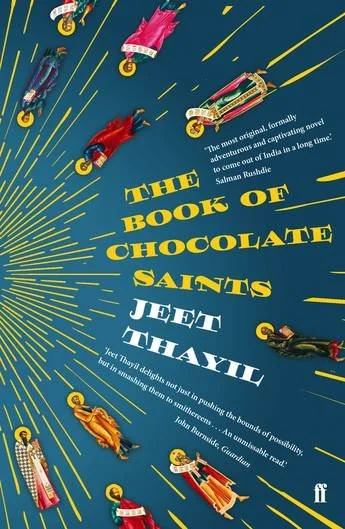
You have partially preempted my question about your relationship to prose-writing and your eye for poetry. More generally, often these worlds operate quite separately. The poetry world is often quite close-knit with strong followers and poet’s poets with a few breaking through via prizes or larger presses, while the fiction world is much larger, having a wider casual readership. These spheres can often feel very compartmentalised. The Book of Chocolate Saints, arguably your magnum opus, I would call a ‘poet’s novel’. The writing has a rhythm and fluency which reveals the poet beneath, and it is something you do find across a number of writers as they move away from poetry to novels in their writing practice.
I've never thought of it as two separate endeavours. I just think of it as writing. I'm working on a novel – which I have been for three years now – but I'm also working on a book of poems. There are times where one bleeds into the other. No one else will see it but I absolutely do. Sometimes it's a line or an image that pushes from one screen to the other, from one book to the other. I find those moments exhilarating. The difference really is that writing a poem, these days, happens very quickly. Each line leads to the next. It's the rhyme, the rhythm and the pictures. There's excitement, because in a day or two you have the whole thing in front of you. You have the satisfaction of completing something, which you don't receive for a long time with a novel. It's a long game. It's also a question of a working man’s way of thinking of literature. If you are a writer – and I have no other job – and that’s how you make your living, it only makes sense that you would be engaged in all kinds of writing. I would find it deathly boring to be trapped in one form. Why? If you can write poems, if you can write a play, if you can write a libretto, if you can write short stories, if you can write fiction then you should do it! Each thing helps the other.
Lastly, going back to the question of poetry in English. For me I often ask myself what tradition of poets am I operating within, and I wonder if that is a question that arises for you? I am comparing it to, say Urdu poetry, where one is directly in a venerated lineage once you start writing.
Unfortunately, Indian poets who write in English do not have a lineage of this type. It's still so new, a lineage which only came into its own in the mid-twentieth century, probably in 1952 with Nissim Ezekiel’s first book. Until then, there were books in English, but there was no sense of ancestry. Certainly for myself I feel as if I belong in three worlds. One is the tradition of poetry written in English anywhere, by anyone writing in English, which is a river unto itself. I feel a part of that tradition. And I feel a part of the tradition of Indian poets who write in English. And I feel part of the tradition of Indian poetry written in Indian languages, which is a tradition that's about three thousand years old. So those are three worlds, which, when I was younger, never overlapped all that much. They were three separate rivers. As you get older and you read more and you understand where you are placed in a flowing history, there's no question that there's more than one tradition. It includes the Rig Veda, the sonnet and the ghazal. Those are vast resources and you would be remiss if you did not think of it all as part of your inheritance.
*
Jeet Thayil is the author of four novels and five collections of poetry. His essays, poetry and short fiction have appeared in the New York Review of Books, Granta, TLS, The London Magazine, The Guardian and The Paris Review, among other venues. He is the editor of The Penguin Book of Indian Poets.
Kashif Sharma-Patel is a poet, writer and co-founding head editor of the87press. Kashif runs a newsletter culture hawker https://kashifsp.substack.com/