
Marx and the Climate Crisis
with Sean O’Brien
This four-part lecture series asks what we can learn from Marx about the climate crisis: its origins, its impacts, and what possible solutions we might seek in the face of increasingly inadequate government efforts to mitigate the escalating devastation worldwide. Developments Marx criticized in early industrial capitalism have had enormous consequences for the planet’s eco-systems, not least in the form of carbon-fuelled climate change. But a century and a half has passed since the early industrial period. What could Marx have to teach us about environmental crisis in the twenty-first century? Was he not a developmentalist and leading proponent of industrial modernization? Did the socialist economies of the twentieth century not pursue a productivist model that churned out CO2 at rates on par with the capitalist world-economy? And what of China, an ostensibly communist country and one of the biggest polluters in the world?
Sean O’Brien is a postdoctoral fellow in the School of English, Drama and Film at University College Dublin. He works mainly in the fields of Precarity Studies, American Studies, and, more recently, the Energy Humanities and the Environmental Humanities. He's also published in Science Fiction Studies, Feminist Media Studies, Black Studies, Film Studies, and Narrative Studies.
You can also visit the Hythe for a transcript of these lectures.
Part 1: Marx and Nature
The first lecture returns to Marx to recover his critical theory of nature, or more precisely society-nature relations, since for Marx modernity is distinguished by the social mediation of first nature by a fetishized ‘second nature’. The way we reproduce ourselves under capitalism, always in service to an abstract ‘economy’, limits our ability not simply to see our world for what it really is, but more pressingly to act in an ecologically sustainable way. Drawing on the philosophical critique of the capitalist domination of nature developed by Frankfurt School critical theorists Alfred Schmidt, Theodor Adorno and Max Horkheimer, this opening lecture explains how ‘the dialectic of Enlightenment’ constitutes first nature as an external object subject to ceaseless appropriation, exploitation, and depletion, a critique these figures would eventually extend to Marx himself as an Enlightenment figure and to the actually existing socialist states of the twentieth century. We will then consider subsequent efforts to reclaim Marx for a Marxian ecology, weighing eco-socialist theories of ‘metabolic rift’ against value-theoretical approaches to societal nature relations to develop a rigorous critique of capital-induced planetary degradation.
Part 2: Marx and Energy
The second lecture extends our line of inquiry into societal nature relations as it pertains to the problem of energy. At the heart of the relation between capital and climate lies energy. Fossil fuels have been the dominant source of energy powering economic expansion since the industrial revolution. This fossil-fuelled economic development, as we now know for certain, has been responsible for the lion’s share of CO2 emissions in the atmosphere, leading to global warming, rising sea levels, ocean acidification and extreme weather events. This lecture draws on work in the Energy Humanities, a cross-disciplinary field of scholarship that highlights the essential contribution that the insights and methods of the humanities bring to bear on the study of our carbon-fuelled modernity and the vital question of transition to cleaner, more sustainable forms of energy. Turning also to recent work on Marx and the critique of energy, including the After Oil collective on ‘petroculture’,Andreas Malm on ‘fossil capital’, and Timothy Mitchell on ‘carbon democracy’, we will develop a theoretical language for the age of carbon modernity.
Part 3: Climate Change
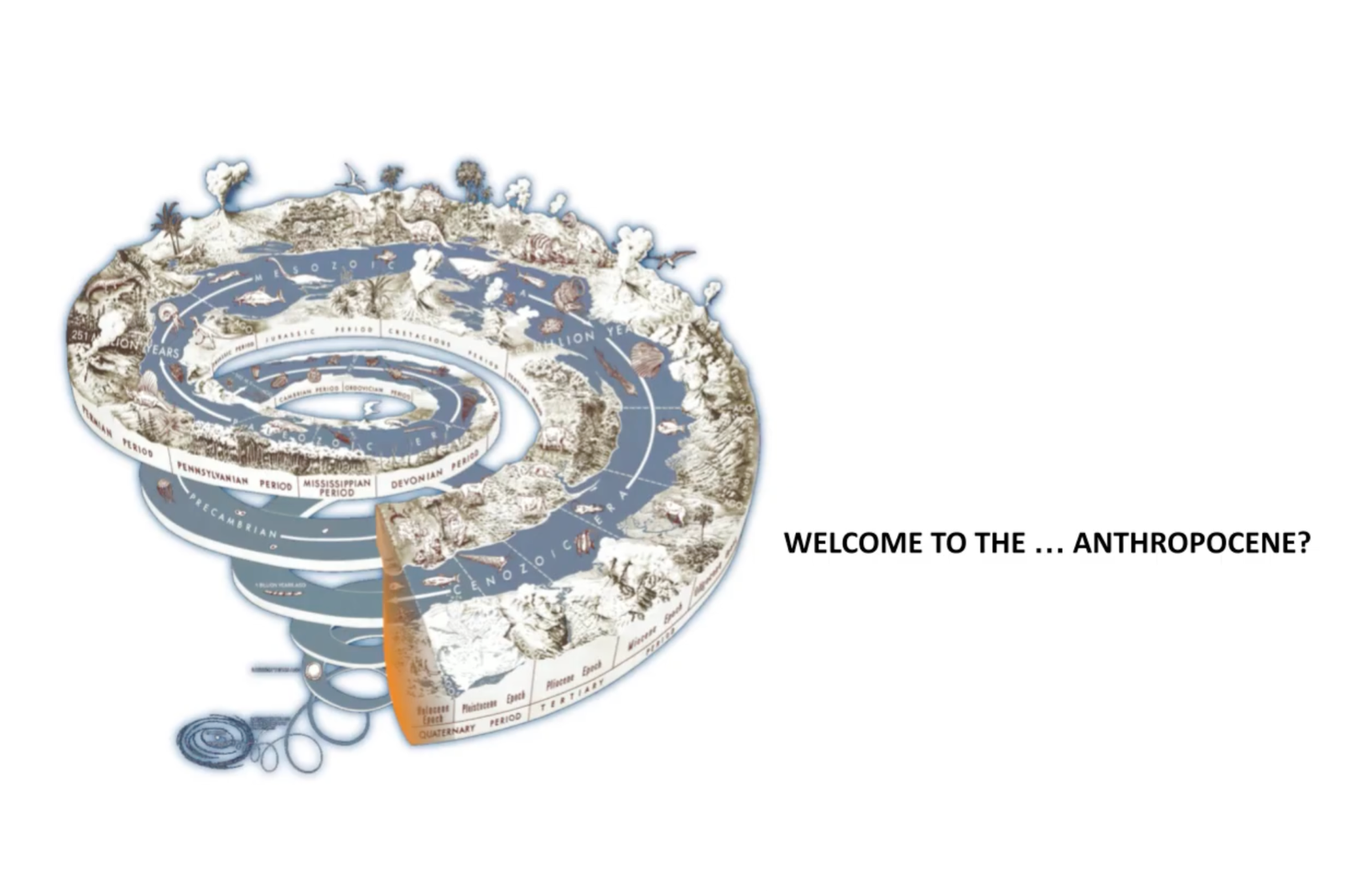
Lecture three now moves to confront what is arguably the greatest issue of our age, the product of a carbon-soaked capitalism, and the terrain on which struggles over energy transition play out: climate change. We’ll begin with a critical account of recent theoretical developments on the concept of the ‘Anthropocene’. We’ll then turn to Marxian counterproposals from environmental geographer Jason W. Moore and ecofeminist philosopher Donna J. Haraway, who suggest we might more accurately name this geological period the ‘capitalocene’. Building on these insights, this lecture concludes by asking where our warming world is headed. What will the political and economic consequences be if we fail to reduce rates of carbon emissions sufficiently to keep future heating levels below the critical 2°C threshold?
Part 4: Marx and Environmentalism
This fourth and final lecture departs from the current “energy impasse” to ask how a contemporary environmental politics might address the obstacles that stand in the way of human and nonhuman flourishing. We begin with a brief history of the environmental movement as it is commonly understood before turning to review a series of critical interventions, including Richard White’s ‘Are You an Environmentalist or Do You Work for a Living?’, Joan Martinez-Alier’s The Environmentalism of the Poor, and Chad Montrie’s A People’s History of Environmentalism in the United States, all of which challenge core assumptions of the dominant historical narrative. The lecture then turns its attention to current developments in the politics of environmentalism, examining first the move from issue-based sustainability initiatives to the total crisis of climate change before moving to consider debates between green growth proponents and degrowth theorists. From here, the lecture pivots to consider what the critique of economic growth can teach us about environmental politics in an age of climate crisis. Drawing on recent Marxist contributions to environmentalism, the lecture concludes with a discussion of the politics of nature and how it has been taken up in contemporary approaches to the climate emergency.